Many environmentalists and nature enthusiasts dream of having zero-waste systems. A zero-waste system is exactly what it sounds like: a system in which every material is useful, and nothing at all is thrown away. Starting in the 1970s, with the advent of composting toilets, people began to realize that even human waste need not be regarded as a true waste product. Even our poop can be used for productive purposes! Imagine recycling your own waste, or “humanure,” into a fertilizer that can make your land more productive. Read on to find out how this is possible…
BENEFITS for the Environment
Although it may seem great to dump a bunch of fertilizer onto one’s land and watch a crop’s growth rate skyrocket, highly processed, factory-made fertilizers are not really very good for the environment. Synthetic fertilizers take a great deal of energy to produce, and that energy generally comes from fossil fuels. Then there is all the energy it takes to transport the fertilizer to the sites where it will be used. Even once you put synthetic fertilizer onto your land, it will only be a quick fix for any fertility problems the soil might be having. Most of the nutrients from these fertilizers are washed away or leached out of the soil before they ever reach the plants, polluting the environment and making it necessary for you to purchase more fertilizer before the next season.
With compost, the story is very different. Compost is a nutrient-rich substance, but also improves soil structure and provides other services (discussed under “Benefits for Your Garden”). The nutrients in compost are not as easily washed away or leached out of the soil, so your plants are able to make more efficient use of the nutrients found in compost. Furthermore, the fact that you will be producing this compost at your very own home means that the compost will not have to be transported, using fossil fuels, in order to reach your land. Another benefit is that you will be taking a small load off of the sewage system, which relies heavily on fossil fuels for operation as well.
Another primary benefit of composting toilets is that they save a huge amount of water! Composting toilets require no water at all, while conventional toilets use about 28% of all water used in an average home.¹ Composting toilets also do not require any electricity or other power source to operate, while conventional toilets do.
BENEFITS for Human Health
In many communities around the world, populations, and therefore toilets, are dense. Septic tanks, pit latrines, and other types of common disposal units have the notorious tendency of leaking into groundwater, which feeds into wells from which the people drink. A composting toilet is much more compact and self-sufficient. In fact, a composting toilet can be entirely sealed off from the ground. Although dangerous hygiene problems are not as common in the sewage systems of developed countries, having self-sufficient composting toilet systems that properly handle waste can reduce the risk of contaminating valuable groundwater in any area.
BENEFITS for Your Wallet
Fertilizers can be quite expensive, but compost is free! Your only cost will be the initial capital investment in materials for building the toilet, which will be minimal. Once the toilet is built, you will only have to buy sawdust, straw, or another material that can soak up the urine and keep the compost from getting too wet. Other than that, all you’ll have left to buy will be toilet paper and cute little decorations to hang up all over your new, lovely bathroom!
BENEFITS for Your Garden
There are some people who say that you should not spread your processed humanure on actual vegetable crops, because then the humanure may come into direct contact with the parts of the plant you will be eating. However, there are others who claim that humanure is a safe and productive substance to be used on all types of crops, including vegetable plants. There are certain countries, including Sweden, for example, that require that humanure be stored for six months prior to use, but, after that six month period, farmers may use the humanure on any type of crop they wish.
The more conservative contingent would say that you should only spread humanure on crops where you will not be eating the part of the crop that touches the humanure. For example, you could spread the product of your composting toilet in your apple orchard, because the apples will never touch the source of any potential contamination. Even blueberry bushes are a safe bet by this standard, since you won’t be eating blueberries that have touched the ground.
Wherever you decide to spread your compost, it will beneficial. There are important nutrients in feces and urine that can be recovered through the process of humanure composting, and you will be tapping into this valuable resource and giving it to your plants, bushes, trees, lawns, etc. Furthermore, like other compost, humanure can improve soil structure, increase water holding capacity, reduce soil erosion, and attract beneficial organisms. Compost provides many more services to your land than does fertilizer (which only provides additional nutrients), and compost is free!
Cost: Low
The materials for building a composting toilet can be purchased for as little as $25. You may be able to get sawdust for free from a mill, but, should you have to buy your dry cover material, this cost will be minimal, perhaps as little as several dollars per year.
Time and Effort: Low to Moderate
Once the initial building process is done, there is very little you will have to do to maintain your composting toilet. You will have to keep a small amount of sawdust, straw, or other dry material on hand to sprinkle in the toilet after you pee, just to make sure the compost doesn’t get overly moist. Periodically, you will have to take out your compost to your compost pile and give the bucket a quick rinse and scrub.
Instructions:
Materials needed:
3/4” hinged plywood top, made of…
•a 3/4”x3”x18” board (purchase board), and
•a 3/4”x18”x18” board (purchase board)
•hinged together (purchase hinges).
Two 1”x10”x18” boards for the sides
Two 1”x10”x20.5” boards for the other two sides
Four 3/4”x3”x12” board for the legs
Four identical five-gallon buckets, with lids
A standard toilet seat
Tools:
Screws and a screw gun, or nails and a hammer
Saw
Measuring tape
Using Your Toilet
Now that you have a toilet, you need to make sure you are using it properly, so as to ensure nutrient-rich, clean, odor-free humanure compost. Before you start to use an empty bucket, you should cover the bottom of the bucket with a couple inches of sawdust, or whatever cover material you have chosen to use. Then you can place the bucket under the toilet seat and proceed to use it! Every time anyone uses the toilet, that person should sprinkle some sawdust into the toilet, so as to make sure the compost stays moist, but not too wet. The sawdust is also important for maintaining a good nutrient ratio in the compost. Humanure is high in nitrogen but low in carbon, while your sawdust or other cover material will be high in carbon and low in nitrogen. Therefore, it is good to sprinkle somewhere between one half quart and one quart of cover material into the toilet every time you poop.²
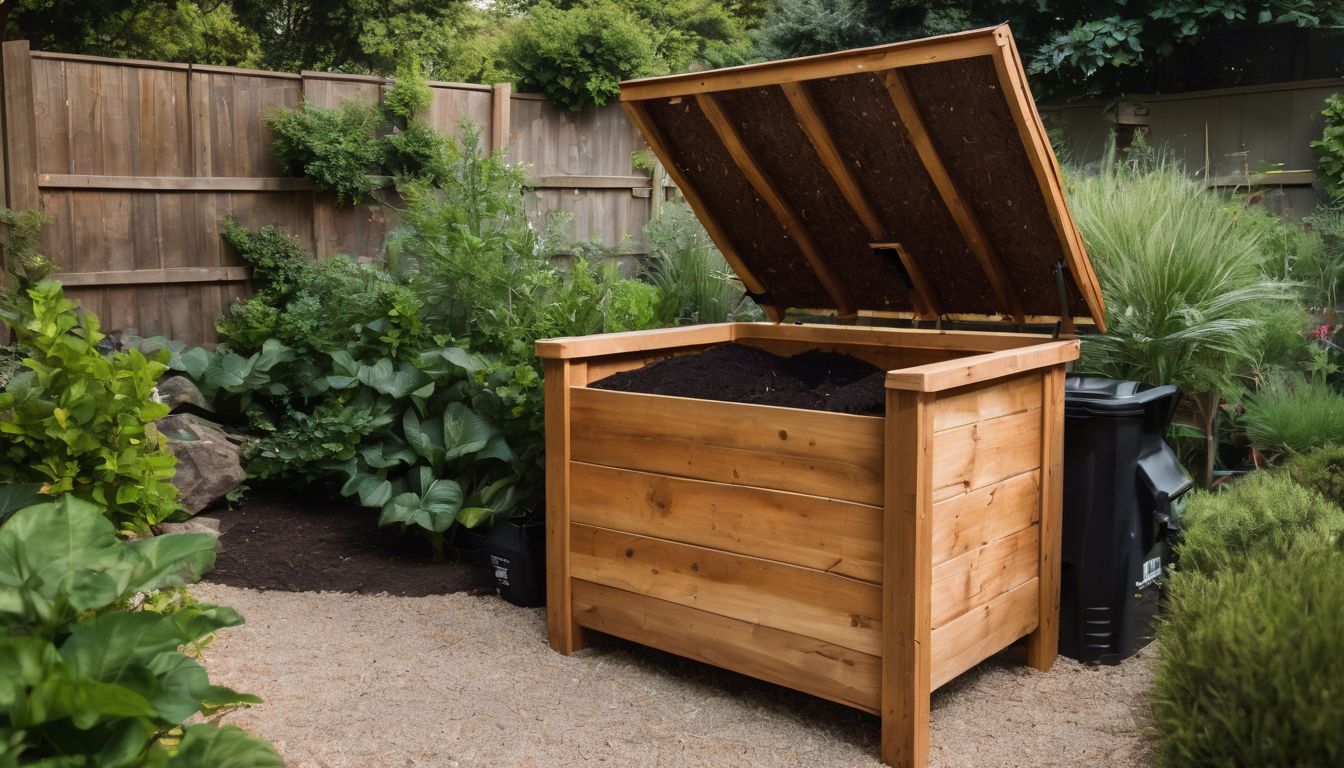
When a toilet bucket is full, you can remove that bucket from under the toilet seat, cover it with a lid, and insert a new bucket. When two buckets are full, you can take them outside to your compost pile. Your compost pile can be inside a bin or it can simply be a pile that is isolated from your gardens, fields, and/or orchards. You should dig a slight, bowl-shaped indentation into your compost pile, and place the new compost there, so as to avoid runoff of fresh compost and to make sure that the newest compost will be closest to the center of the pile, where it will be able to heat up the most. You should cover the new compost with a layer of old compost and a layer of other, clean organic material, like leaves, weeds or straw.
Once you have put your compost in the pile, rinse out the bucket and scrub it with a toilet bowl scrub brush, emptying the liquid onto the top of the compost pile. You may use biodegradable soap to wash the bucket if you wish, but this should not be necessary to keep your bucket odor-free. After about ten years, you will probably notice an odor developing, and, at that point, it would be good to buy a new set of buckets.
If your compost is well-managed, it should be ready to use within six months at the most. If, however, you opt not to manage your compost at all, you can still use it as fertilizer after it has been left to sit for two years.
Troubleshooting
If the compost pile itself starts to develop an unpleasant odor, that probably means there are microorganisms inside the pile performing respiration and breaking down humanure in the absence of oxygen. All your pile needs at this point is to be turned over and aerated somewhat. This process will allow oxygen back into the pile, and the microorganisms will be able to use that oxygen to break down the humanure without producing any kind of offensive odor.
If you notice that critters are congregating around your compost pile, you might consider putting up a screen around the pile to keep these unwanted guests away. Insects and other critters are not only annoying, but could also potentially serve as vectors for disease if they form a colony in your compost pile. Another way to keep insects away is to put bloodmeal onto your compost pile, because bloodmeal makes the environment a less hospitable place for bugs to live. ³
Enjoy your building and composting adventures!
¹Source 6.
²Please see source 5 for more information.
³Please refer to source 5.
Resources:
1. Wikipedia article on Composting Toilets
http://en.wikipedia.org/wiki/Composting_toilet
2. Practical Action- technical information on composting toilets
http://practicalaction.org/docs/technical_information_service/compost_toilets.pdf
3. The Sawdust Toilet
http://weblife.org/humanure/chapter8_2.html
4. “The Dry Composting Toilet”
http://www.zoomzap.com/techniques/SES-eng.php
5. “Composting Toilets, Pasteurization and Permits”
http://www.networkearth.org/naturalbuilding/toilets.html
6. Eartheasy: “25 Ways to Save Water at Home”
http://www.eartheasy.com/live_water_saving.htm
7. “Composting Toilets”
http://www.omick.net/composting_toilets/brownsville_
8. Greeniacs guide: Make Your Own Compost
http://www.greeniacs.com/GreeniacsGuides/Make-Your-Own-Compost.html
9. Greeniacs article: Home Composting
http://www.greeniacs.com/GreeniacsArticles/Home-Composting.html